
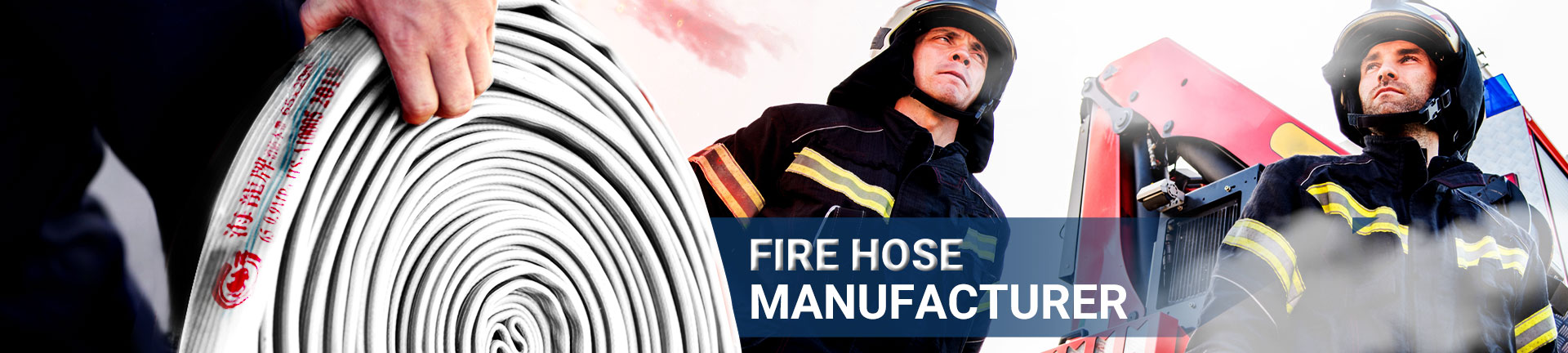


Year-End Fire Drills in Taiwan: Indoor Hydrant Operating Steps and a Hose Checklist
YEAR-END FIRE DRILL · INDOOR HYDRANT GUIDE
Year-end is when many building management committees and factories in Taiwan schedule their second fire drill of the year. If a drill only covers sounding the alarm, calling out the evacuation and picking up an extinguisher, nobody actually practices with the indoor hydrant. If water is discharged, draining and re-rolling the hose afterwards is easily skipped, and wet hoses end up pushed back into the cabinet. This guide draws on Taiwan's fire regulations, the appendix table of the Taipei City Fire Department's Type 2 indoor hydrant promotion plan and Sochiao's own Fire Hose Instruction Manual to cover drill design, hydrant operating steps and a post-drill hose checklist.
I.How often are fire drills required in Taiwan?
Besides training, the fire protection plan covers the in-house fire brigade, a self-inspection of fire and evacuation facilities at least once a month, maintenance of fire safety equipment, and supervision of open flames and electrical use. The brigade's teams depend on headcount: sites with 10 or more employees need at least a firefighting team, a notification team and an evacuation guidance team; sites with 50 or more employees must add a safety protection team and a first aid team.
| Team | Required when | Suggested year-end drill focus |
|---|---|---|
| Firefighting team | 10+ employees | First-response firefighting with extinguishers and indoor hydrants |
| Notification team | 10+ employees | Calling 119 and internal alerts and announcements |
| Evacuation guidance team | 10+ employees | Guiding people to safety and taking a headcount |
| Safety protection team | Added at 50+ employees | Helping close fire doors and other measures that limit fire spread |
| First aid team | Added at 50+ employees | Initial care of casualties and coordinating hospital transport |
Team requirements: Enforcement Rules of the Fire Services Act. Drill focus is a suggestion; actual roles follow each site's approved fire protection plan.
Once the drill date is set, notify the local authority in advance as required; follow your local fire authority's announcements for how and when to notify. If the site has day shift, night shift or weekend duty staff, invite people from each shift to the year-end drill so everyone who may be on site has practiced at least once.
Whether a residential building or factory must appoint a fire prevention manager depends on its use, size and occupancy, and the local fire authority can confirm this. Buildings that are not legally required can still follow the same six-month cycle and use the year-end drill to confirm their fire equipment is ready for use. For self-help fire preparedness aimed at management committees and property managers, see HK Fire Warning for Taiwan Communities.
II.How do you operate an indoor hydrant? Type 1 and Type 2 differ
| Item | Type 1 indoor hydrant | Type 2 indoor hydrant |
|---|---|---|
| Operators | 2 | 1 |
| Hose in cabinet | Two 15 m hoses | One 30 m flexible or semi-rigid hose |
| How water is started | Second person opens the valve after the hose is laid out | Valve opened first; water controlled at the nozzle |
| Nozzle reaction at 7 kgf/cm² | About 17.7 kg | About 10.5 kg |
| Permitted sites | All required sites; the only option for Class D | All except Class D and furniture showrooms |
Sources: appendix table of the Taipei City Fire Department's Type 2 promotion plan; Article 34 of the Standards for Installation of Fire Safety Equipment Based on Use and Occupancy.
Operating steps for a Type 1 indoor hydrant
1Split the roles
One person takes the nozzle and hose towards the fire; the other stays at the hydrant, ready to open the valve.
2Lay the hose out in an arc
Lay the hose out in a sweeping arc and avoid sharp turns near the outlet or at building corners.
3Check every coupling
Make sure the couplings between hose and hydrant and between hose and nozzle are fully engaged; do the same when coupling on the second hose.
4No V-kinks before charging
Confirm the hose lies smoothly with no V-shaped kinks and nothing on top of it, then open the valve and build pressure slowly.
5Grip the nozzle and discharge
The nozzle operator stands firm and holds the nozzle with both hands; once the valve is open, the second person can move behind them to help support the hose.
Operating steps for a Type 2 indoor hydrant
1Open the valve
Open the cabinet door and turn on the hydrant valve.
2Pull out the hose
Pull the hose towards the fire; it does not need to be fully unrolled.
3Control water at the nozzle
Aim at the fire and use the nozzle to start and stop the water.
Indoor hydrant practice at a year-end drill can be split into three stages: first, firefighting team members work in pairs to open the cabinet, lay out and couple the hose; second, they discharge water at a location that can drain; third, they drain, inspect and re-roll the hose. Rotating every pair through the stages confirms that each member can operate the hydrant, rather than relying on one person's demonstration.
For how the two hydrant types compare in residential buildings, see Type 1 vs Type 2 Indoor Fire Hydrants in Taiwan. Class D factories may only install Type 1; for hose selection, see Type 1 Hydrant Hose for Taiwan Factories. Semi-rigid hose for Type 2 hydrants is shown on the Hailong Semi-Rigid Fire Hose page.
III.Do drills have to discharge water, and what should be checked first?
Safety checks before discharge (from Sochiao's Fire Hose Instruction Manual)
- Only firefighters or people with equivalent discharge training should operate the hose; an incorrect nozzle grip or coupling connection can cause injury.
- Use the hose within the working pressure marked on it.
- During discharge, everyone except the operators should keep clear of the hose.
- Where vehicles must cross, use a hose bridge so they do not drive directly over the hose.
- Do not charge a new hose straight out of the box; roll and unroll it a few times first to make it more supple.
Five mistakes to avoid during drills
- ✕Cutting packing tape or hose ties with a knife, which can damage the hose.
- ✕Laying the hose out with sharp turns near the outlet or at wall corners.
- ✕Charging the hose while it still has V-shaped kinks.
- ✕Folding a hose that still holds water into a V and dragging it back.
- ✕Letting couplings or other hard objects strike the hose; the lining can be damaged and leak even when the outside looks fine.
IV.How should hoses be drained, rolled and returned after a drill?
- Close the valve before uncoupling: shut the hydrant valve and disconnect the couplings only once there is no pressure in the hose.
- Drain the hose: let all the water run out and do not leave water inside the hose.
- Inspect the hose: check for damaged weft yarn, wear on the binding wire or band where the hose joins the coupling, and deformed couplings.
- Clean off dirt: remove any mud or oil before rolling the hose.
- Stow it neatly: roll the hose without twists, place it back on the rack and close the cabinet door.
Hailong hose has a TPU lining, and the catalog states it does not need to be hung to dry after use; follow the manufacturer's instructions for other brands. If a hose dryer is used, Sochiao's manual advises a maximum of 50°C, as temperatures above 70°C can shorten hose life and cause the lining to separate. For moisture problems inside hydrant cabinets, see Taiwan Rainy Season Fire Hose Cabinet Inspection Guide.
V.What should a year-end hydrant cabinet and hose check cover?
- No clutter, vehicles or pallets in front of the cabinet
- The cabinet door opens fully
- No standing water, damp or mold inside
- The "fire hydrant" marking is clear and legible
- Year of manufacture, working pressure and type approval number are legible
- Type 1 hydrant hoses more than 10 years past manufacture must be pressure tested or replaced
- No damaged weft yarn, cuts or obvious wear on the jacket
- Couplings are not deformed or corroded
- Binding wire or band at the hose-coupling joint is not worn
- The nozzle is in the cabinet and switches between straight stream and fog
- Record the drill date, number of participants and any problems found
- Confirm the site's inspection filing deadline; Class D sites, for example, file by the end of November each year
- List hoses to be replaced with quantity, specification and year of manufacture
Inspection filing frequency varies by occupancy class. Class A sites, for example, are inspected and filed every six months, while Class D sites are inspected once a year and file by the end of November. Fixing year-end findings before the next filing avoids last-minute parts orders at inspection time.
The hose-coupling joint on Hailong hose
Each end of a Hailong hose has a protective sleeve at least 12 cm long, secured with a hydraulically crimped band. When checking the hose-coupling joint, confirm the sleeve and band are intact.For service life and replacement decisions, see How Long Does a Fire Hose Last?; for a site-wide stocktake, see Annual Fire Hose Inventory Guide; for coupling approval requirements, see Fire Hose Quick-Connect Couplings (25–75 mm); for routine self-inspection, see National Disaster Day Fire Hose Compliance Checklist.
VI.What should you do with a hose that fails during a drill?
When buying replacement hose, check three things against the hose markings: the nominal size matches the existing hydrant, the working pressure is no lower than the original design, and the type approval number is clearly shown. For pressure ratings and acceptance documents, see Fire Hose Pressure Ratings and Testing.
To extend a fire hose's service life, the key is choosing high-quality thermoplastic polyurethane (TPU), an environmentally friendly material. Hailong hose has a TPU lining and an industrial-grade high-tenacity polyester jacket, and is made entirely in Taiwan. See the full range at Hailong Fire Hose.
Frequently Asked Questions
How often must in-house fire brigade training be held?
Under the Enforcement Rules of the Fire Services Act, the firefighting, notification and evacuation training in a fire protection plan must be held at least once every six months, for at least four hours each time, with advance notice to the local municipal or county authority. The exact arrangements follow each site's approved fire protection plan.
Do residential buildings need to hold fire drills?
Under Article 13 of the Fire Services Act, sites required to appoint a fire prevention manager must carry out training under their fire protection plan. Whether a residential building falls into this group depends on its use, size and occupancy, and the local fire authority can confirm it. Buildings that are not legally required can still hold drills on the same six-month cycle.
Does a fire drill have to discharge water from an indoor hydrant?
The regulations require firefighting, notification and evacuation training but do not state that every drill must discharge water. If water will be discharged, choose a location that can drain and have trained people operate the hydrant. Without discharging, staff can still practice opening the cabinet, laying out the hose, coupling and re-rolling.
Do fire hoses need to be dried after a drill?
Every hose should be fully drained before it is rolled up. The Hailong catalog states that its TPU-lined hose does not need to be hung to dry after use; follow the manufacturer's instructions for other brands. If a hose dryer is used, Sochiao's instruction manual advises a maximum temperature of 50°C.
When does a fire hose need to be replaced?
Sochiao's Fire Hose Instruction Manual says a hose should be discarded or dealt with appropriately if its weft yarn is damaged, the binding wire or band at the hose-coupling joint is worn, or a coupling is deformed. The Taipei City Fire Department's table also states that Type 1 indoor hydrant hoses more than 10 years past manufacture must be pressure tested or replaced.
Does a Type 1 indoor hydrant really need two operators?
Yes. The Taipei City Fire Department's table lists Type 1 as a two-person operation, with a nozzle reaction of about 17.7 kg at 7 kgf/cm², while Type 2 can be operated by one person with about 10.5 kg of reaction. Sites with Type 1 hydrants should roster at least two trained operators at night and on weekends.
Replace Failed Hoses in One Order After Your Year-End Drill
Once your drill and year-end check are done, list the hoses that need attention and we will match them to the right Hailong specifications and provide a quotation.
- ✔Number of hydrant cabinets, and whether they are Type 1 or Type 2
- ✔Nominal size, working pressure and length of the existing hoses
- ✔Number of hoses to replace and their year of manufacture
Email: sochiao@ms14.hinet.net | Phone: +886-4-2271-5577
A specialist fire hose manufacturer founded in 1980 in Taiping, Taichung, certified to ISO 9001 by TÜV SÜD. Hailong fire hoses received Ministry of the Interior type approval in May 2011 and are made entirely in Taiwan.
Specifications and approvals: Catalog | Type Approval Certificates | About Us